Turning energy and building data into knowledge that AI can use reliably.
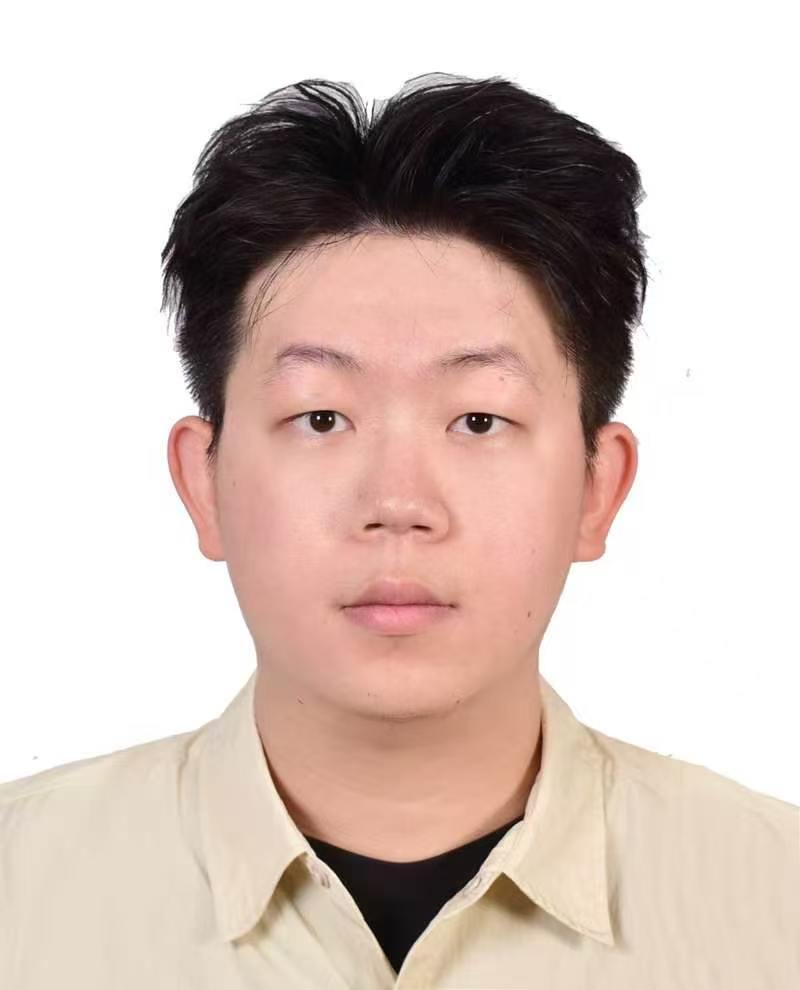
Hello, I am Sun Ke. I am currently working at the Hong Kong University of Science and Technology on building semantics and large language models, with a focus on energy-system knowledge graphs, semantic model fine-tuning, and agentic workflows. My goal is to organize fragmented and inconsistent engineering data into computable, explainable, and traceable knowledge—so that AI can show what an answer is based on and recognize when it should abstain.
Building semantics, large language models, and reliable AI analysis
Shanghai Jiao Tong University, spanning energy engineering, low-carbon studies, and data methods
From urban energy modelling to smart-city platforms and enterprise AI systems
What I am working to solve
Give heterogeneous data a shared language
Building, urban, and energy datasets often disagree in naming, granularity, and system boundaries. I use knowledge graphs and structured semantics to make relationships explicit and establish a common language across data sources.
Make indicators and calculations traceable
Defining what data means is not enough; a system must also know how it should be computed. I focus on explicitly representing scope, scale, conversion relationships, and calculation rules to reduce metric misuse and boundary confusion.
Let AI reason within constraints
Graph structures, valid paths, and engineering rules can constrain analysis, making results more accurate, explainable, and robust. When evidence is insufficient, the model should recognize the boundary and stop.
Selected work
A city-wide useful-work model covering 48 sectors and more than 100 energy-conversion processes, used to compare energy efficiency and structural differences across 63 cities from 2010 to 2020.
Read the research summary → RESOURCES, CONSERVATION & RECYCLING · 2025 The urban infrastructure energy-carbon nexusA direct-and-embodied footprint analysis across 25 cities, showing that changes in energy use and carbon emissions do not always move in parallel.
Read the research summary →From research to engineering practice
Education
- HKUST · Research on building semantics and large language models
- Shanghai Jiao Tong University · M.Phil. in Resource and Environment, 2025
- Shanghai Jiao Tong University · B.Eng. in Nuclear Engineering and Technology, 2022
Industry experience
- Engineering enterprise · Research data governance, Web GIS, and an internal AI system
- EY Shanghai · ESG data verification and bilingual corpus processing
- State Grid Yingda Carbon Asset · Substation carbon accounting and power-grid mitigation models
- Decision support · Turning multi-source data into evidence for planning and low-carbon analysis
Methods and tools
- AI and development · Python, PyTorch, TensorFlow, LangGraph
- Data and platforms · SQL, Spark, Hadoop, Django, Web GIS
- Engineering modelling · MATLAB, COMSOL, QGIS, SolidWorks
- Analytical methods · Clustering, regression, path algorithms, and spatial analysis
Recent updates
A discussion of how semantic structures and computation rules can constrain model reasoning across urban energy, building management, and complex data analysis.
PHOTOGRAPHY Walking, pausing, and noticing the lightImages from Shanghai, Suzhou, Hong Kong, Yunnan, and everyday life.
Let’s connect
If you are also interested in building semantics, energy-system knowledge organization, or reliable AI analysis, feel free to get in touch.
SUN Ke · ksunak@connect.ust.hk Hong Kong, China